
Types of graft
Connective tissue graft
Tissue from under the surface of the palate, placed beneath the gum. The most widely studied option for covering roots.
Free gingival graft
A thin layer from the palate placed on the surface, mainly to build a band of firm gum where there is very little.
Tissue substitute
A collagen matrix used instead of your own tissue in suitable cases, so no second site on the palate.
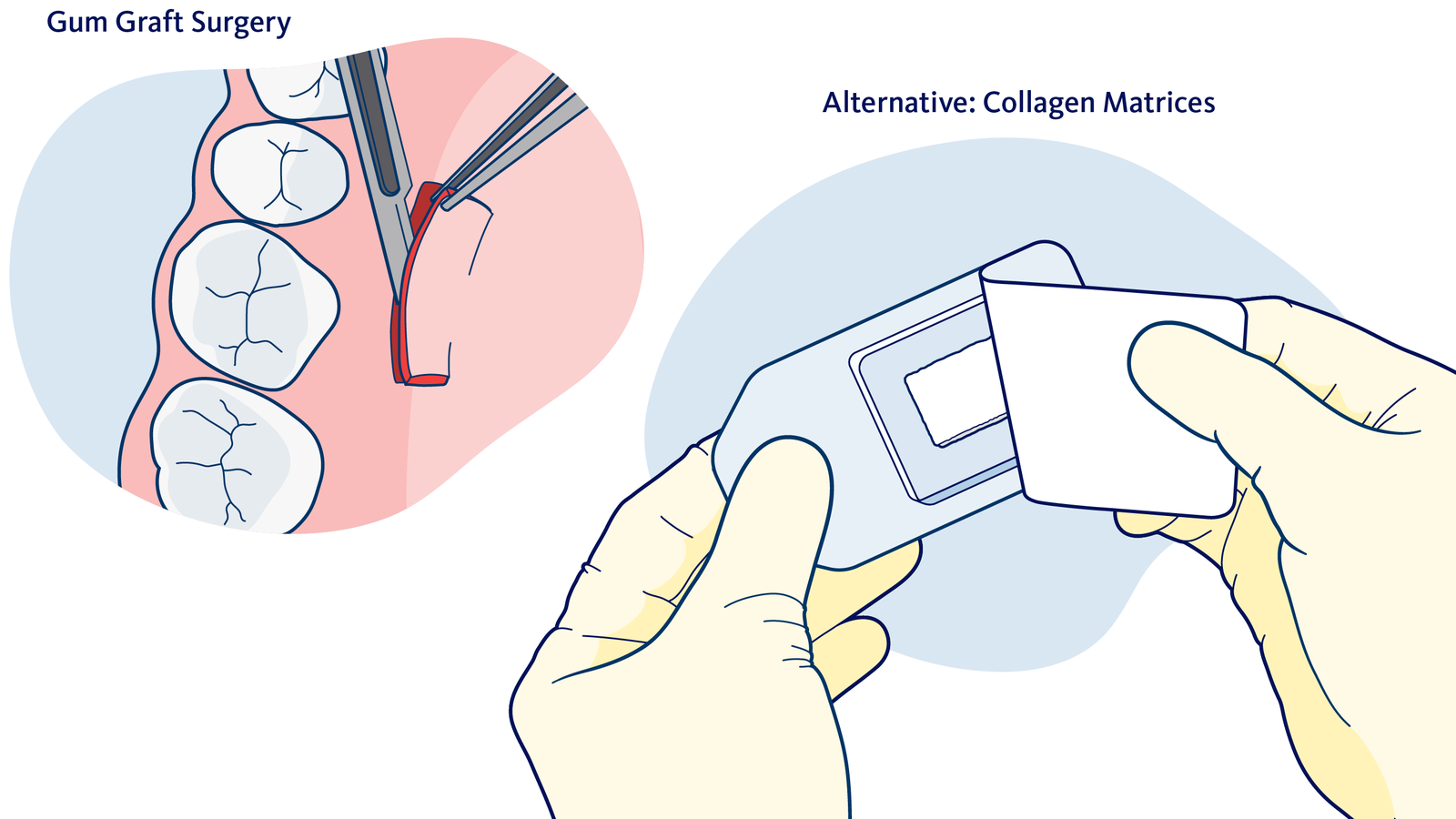

- 1 The gum around the recession is outlined.
- 2 The gum is gently prepared to receive the graft.
- 3 The graft is positioned over the exposed root.
- 4 The gum is moved up over the graft and stitched.
How it's done
Under local anaesthetic, the gum around the affected teeth is prepared and the graft is positioned and secured with fine stitches. Where suitable, we use a tunnel technique that slides the graft under the gum through small openings rather than larger incisions. Several neighbouring teeth can often be treated in one visit.
Recovery
- First days
Some swelling and tenderness, especially on the palate if tissue was taken from there. Soft, cool foods.
- First weeks
Don't brush the graft area — you'll use a mouth rinse instead until we review you and remove stitches.
- Months
The graft continues to mature and blend in. We show you a gentle brushing technique to protect it.
Realistic expectations
How much of a root can be covered depends on the type of recession and the bone between the teeth. Full coverage isn't always achievable, but thicker, healthier gum is a worthwhile result in its own right. We'll explain what is realistic for you before treatment.
Common questions
Is the palate the sore part?
Often, yes. A protective plate or dressing can make it more comfortable, and a tissue substitute avoids the palate altogether when it's suitable.
Can gum be grafted around an implant?
Yes. Thicker, firmer gum around an implant can make it easier to clean and improve its appearance. Problems with an implant.
Will the recession come back?
Results are generally stable when the cause — often hard brushing or gum disease — is addressed and the area is maintained.